Wrattonbully
Registered in 2005 and still largely unseen, sitting on the same limestone ridge as Coonawarra. It grows 1.3% of Australia's wine at 7.9 tonnes a hectare, and most of the Cabernet leaves in a blend with a bigger name on the label.
Known for
- Cabernet Sauvignon
- Shiraz
- Merlot
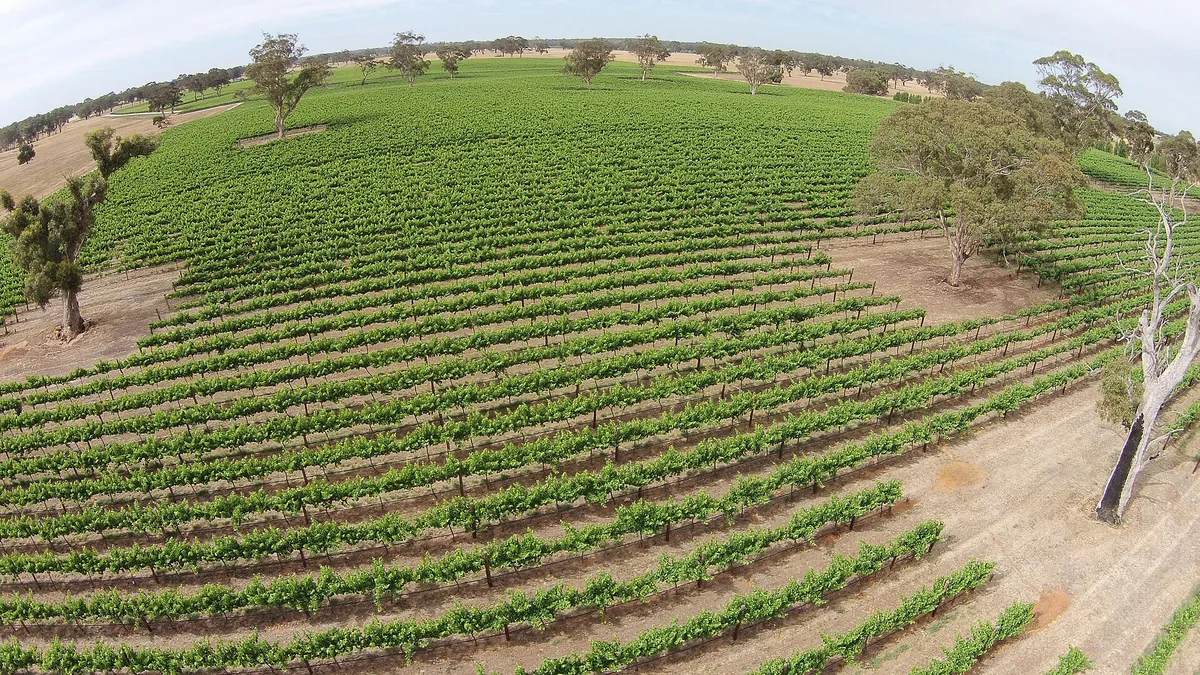
Why Wrattonbully tastes the way it does
The same limestone ridge as Coonawarra and Padthaway, with terra rossa over it, but younger and far less known. Cabernet Sauvignon and Shiraz dominate, with good structure and reliable ripening, and most of the fruit goes to companies based elsewhere.
January averages 21°C here and the growing season adds up to 1,635 heat units, which is moderate by Australian standards.
A short history
Planted seriously only from the late 1960s, then expanded hard through the 1990s when Limestone Coast fruit was in demand.
Wrattonbully was registered as a protected wine name in 2005, which makes the boundary a legal definition rather than a marketing one.
What your house does to a bottle from Wrattonbully
A bottle from Wrattonbully ages at the rate its temperature sets, not at the rate the vintage chart says. Barello's model is the physical one: every 10°C above 13°C roughly doubles the rate, and at 25°C or more you are not ageing it, you are cooking it. Pick where you live and where the bottle actually sits.
Choose a city and a spot, and this line will tell you how much faster the bottle is ageing than it would in a cellar.
This is the same model that dates every bottle in Barello. Open the app to run it against your own wine. Or read how to store wine without a cellar, or the wine temperature chart.
Wrattonbully in numbers
| Planted vineyard | 2,666 ha | number 12 of 64 in Australia |
|---|---|---|
| Region area | 753 km² | 3.54% of it under vine |
| Grapes crushed | 21,076 t a year | 7.9 tonnes a hectare |
| January average | 21°C | number 21 coolest of 64 |
| Heat units | 1,635 | warmth added up over the growing season |
| Land in the GI rises | 41 to 145 m | the boundary, not where the vines are |
| Registered | 2005 | as a protected name |
Nearby
- Coonawarra33 km south, also Cabernet Sauvignon country
- Padthaway47 km north west, known for Chardonnay instead
- Grampians164 km east, known for Shiraz instead
Distances are between the registered centres of each region, so they are as the crow flies rather than as the road goes.
Where these numbers come from
Boundaries and figures: Wine Australia Geographical Indications register, used under CC BY 4.0. Climate figures are the register's own long-run averages, measured in the vineyard. The history and the tasting notes above are Barello's own.