Grampians
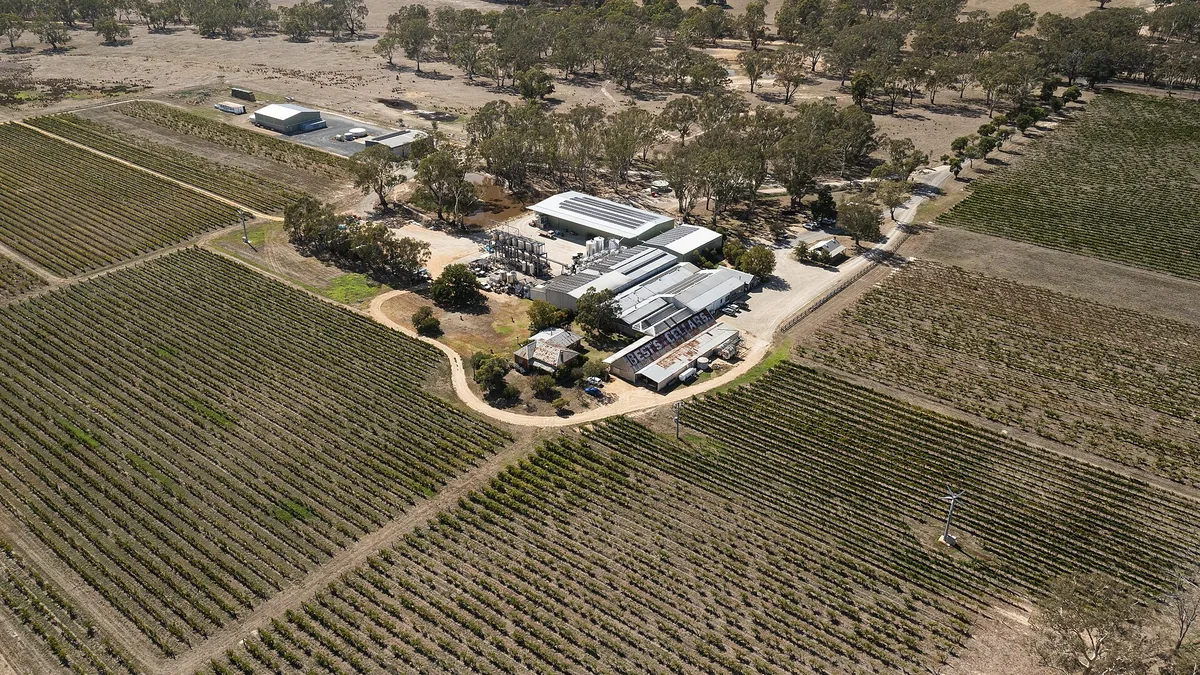
Sparkling Shiraz was taken seriously here before anywhere else, in cellars dug by hand into the rock at Great Western. Some of the Shiraz vines date from the 1860s, on land running up to 1,161 metres.
Known for
- Shiraz
- Sparkling Shiraz
- Riesling
Why Grampians tastes the way it does
Cool and elevated, on poor soils with low yields. Shiraz is the signature, peppery and medium-bodied rather than dense, and the district has a long association with sparkling Shiraz. Riesling from the higher sites is also good.
January averages 20.7°C here and the growing season adds up to 1,515 heat units, which is moderate by Australian standards.
A short history
Planted in the 1860s during the gold rush, with cellars cut by hand into the rock at Great Western that are still in use. The district escaped the worst of phylloxera and keeps some of the oldest Shiraz vines in the country.
Grampians was registered as a protected wine name in 1997, which makes the boundary a legal definition rather than a marketing one.
What your house does to a bottle from Grampians
A bottle from Grampians ages at the rate its temperature sets, not at the rate the vintage chart says. Barello's model is the physical one: every 10°C above 13°C roughly doubles the rate, and at 25°C or more you are not ageing it, you are cooking it. Pick where you live and where the bottle actually sits.
Choose a city and a spot, and this line will tell you how much faster the bottle is ageing than it would in a cellar.
This is the same model that dates every bottle in Barello. Open the app to run it against your own wine. Or read how to store wine without a cellar, or the wine temperature chart.
Grampians in numbers
| Planted vineyard | 640 ha | number 32 of 64 in Australia |
|---|---|---|
| Region area | 9,424 km² | 0.07% of it under vine |
| Grapes crushed | 2,051 t a year | 3.2 tonnes a hectare |
| January average | 20.7°C | number 16 coolest of 64 |
| Heat units | 1,515 | warmth added up over the growing season |
| Land in the GI rises | 142 to 1,161 m | the boundary, not where the vines are |
| Registered | 1997 | as a protected name |
Nearby
- Bendigo130 km north east, 2.0°C warmer
- Macedon Ranges160 km east, known for Sparkling instead
- Coonawarra161 km west, known for Cabernet Sauvignon instead
Distances are between the registered centres of each region, so they are as the crow flies rather than as the road goes.
Where these numbers come from
Boundaries and figures: Wine Australia Geographical Indications register, used under CC BY 4.0. Climate figures are the register's own long-run averages, measured in the vineyard. The history and the tasting notes above are Barello's own.