Tasmania
The coolest wine region in Australia by a distance: 15.8°C in January and 777 heat units, against 1,364 for the next coolest. The whole state is a single GI, and the cold is why its sparkling and Pinot Noir are taken seriously.
Known for
- Sparkling
- Pinot Noir
- Chardonnay
- Riesling
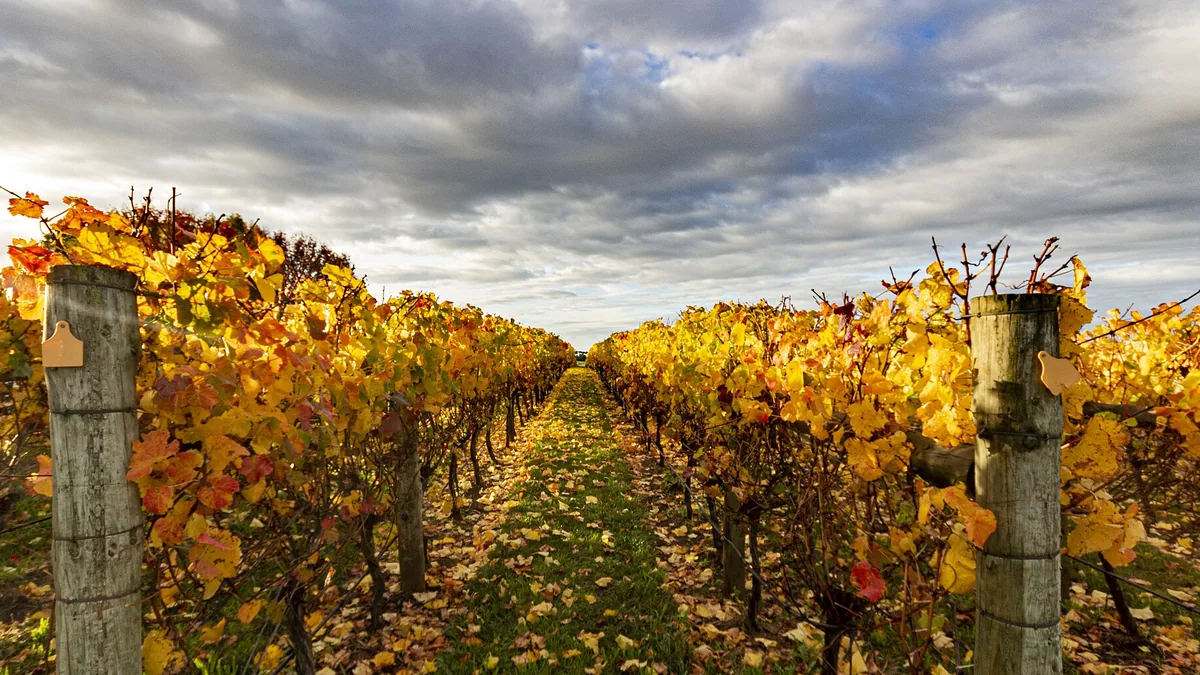
Why Tasmania tastes the way it does
Cold and maritime, with a long slow ripening season and naturally high acid. Sparkling base is the island's strongest card, with Pinot Noir and Chardonnay its best table wines and Riesling and Pinot Gris close behind. In poor years the fruit may not ripen at all, which is the trade for the years when it does.
January averages 15.8°C here and the growing season adds up to 777 heat units, which is cool enough that ripening is never guaranteed.
A short history
Vines were planted in the 1820s but died out commercially. The modern industry dates from the 1950s and grew slowly until mainland sparkling producers began buying Tasmanian fruit through the 1980s and 90s.
Tasmania was registered as a protected wine name in 1994, which makes the boundary a legal definition rather than a marketing one.
What your house does to a bottle from Tasmania
A bottle from Tasmania ages at the rate its temperature sets, not at the rate the vintage chart says. Barello's model is the physical one: every 10°C above 13°C roughly doubles the rate, and at 25°C or more you are not ageing it, you are cooking it. Pick where you live and where the bottle actually sits.
Choose a city and a spot, and this line will tell you how much faster the bottle is ageing than it would in a cellar.
This is the same model that dates every bottle in Barello. Open the app to run it against your own wine. Or read how to store wine without a cellar, or the wine temperature chart.
Tasmania in numbers
| Planted vineyard | 1,702 ha | number 19 of 64 in Australia |
|---|---|---|
| Region area | 68,582 km² | 0.02% of it under vine |
| Grapes crushed | 12,705 t a year | 7.5 tonnes a hectare |
| January average | 15.8°C | number 1 coolest of 64 |
| Heat units | 777 | warmth added up over the growing season |
| Land in the GI rises | 0 to 1,264 m | the boundary, not where the vines are |
| Registered | 1994 | as a protected name |
The nearest wine country
- Mornington Peninsula429 km north, 3.9°C warmer
Nothing else on this map is close. Distances are between the registered centres of each region, as the crow flies.
Where these numbers come from
Boundaries and figures: Wine Australia Geographical Indications register, used under CC BY 4.0. Climate figures are the register's own long-run averages, measured in the vineyard. The history and the tasting notes above are Barello's own.