Rutherglen
Fortified Muscat and Topaque aged in a solera for decades, under a classification the region wrote for itself that runs from Rutherglen up to Rare. Nothing quite like it is made anywhere else, and Rutherglen kept going through every fashion that said to stop.
Known for
- Fortified Muscat
- Topaque
- Durif
- Shiraz
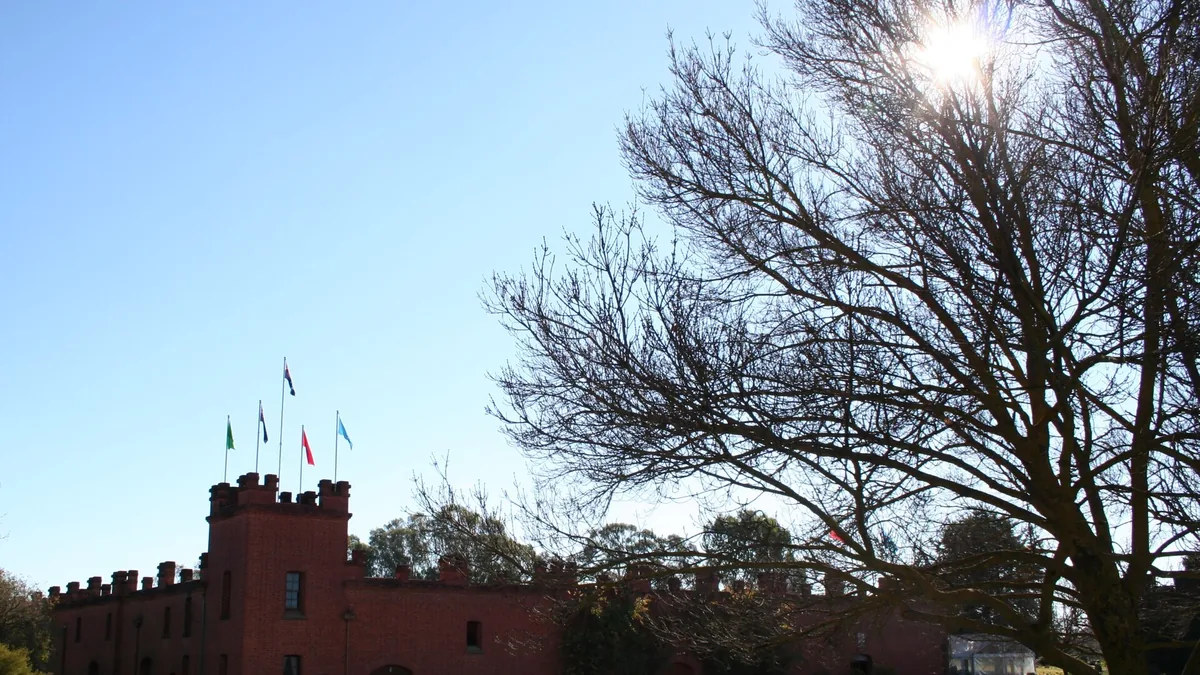
Why Rutherglen tastes the way it does
Hot and dry, which is exactly what fortified wine wants. Muscat and Topaque are picked late, fortified, and aged for years or decades in old barrels in a solera, concentrating as water evaporates. They run from fresh and raisiny to almost black and viscous, and the region grades them in four tiers, from Rutherglen up to Rare.
January averages 24.3°C here and the growing season adds up to 2,049 heat units, which is warm, and it shows in riper, fuller wine.
A short history
Gold brought settlers in the 1850s and vines followed. Phylloxera arrived in 1899 and destroyed most of the district, but the fortified tradition survived it, and some solera stocks still in use were laid down before the second world war.
Rutherglen was registered as a protected wine name in 1997, which makes the boundary a legal definition rather than a marketing one.
What your house does to a bottle from Rutherglen
A bottle from Rutherglen ages at the rate its temperature sets, not at the rate the vintage chart says. Barello's model is the physical one: every 10°C above 13°C roughly doubles the rate, and at 25°C or more you are not ageing it, you are cooking it. Pick where you live and where the bottle actually sits.
Choose a city and a spot, and this line will tell you how much faster the bottle is ageing than it would in a cellar.
This is the same model that dates every bottle in Barello. Open the app to run it against your own wine. Or read how to store wine without a cellar, or the wine temperature chart.
Rutherglen in numbers
| Planted vineyard | 778 ha | number 29 of 64 in Australia |
|---|---|---|
| Region area | 998 km² | 0.78% of it under vine |
| Grapes crushed | 3,229 t a year | 4.2 tonnes a hectare |
| January average | 24.3°C | number 53 coolest of 64 |
| Heat units | 2,049 | warmth added up over the growing season |
| Land in the GI rises | 122 to 592 m | the boundary, not where the vines are |
| Registered | 1997 | as a protected name |
Nearby
- Beechworth30 km south east, 1.8°C cooler
- King Valley67 km south, 2.0°C cooler
- Goulburn Valley115 km west, known for Marsanne instead
Distances are between the registered centres of each region, so they are as the crow flies rather than as the road goes.
Where these numbers come from
Boundaries and figures: Wine Australia Geographical Indications register, used under CC BY 4.0. Climate figures are the register's own long-run averages, measured in the vineyard. The history and the tasting notes above are Barello's own.